Meat Temperature Chart Made Simple: Steak Doneness and USDA Safe Temperatures Explained
The Meat Doneness Temperature Chart is an interactive USDA-safe cooking temperature guide for beef, pork, poultry, fish and lamb, with a Celsius/Fahrenheit toggle, rest-time guidance and a thermometer-reading doneness lookup that works fully offline.
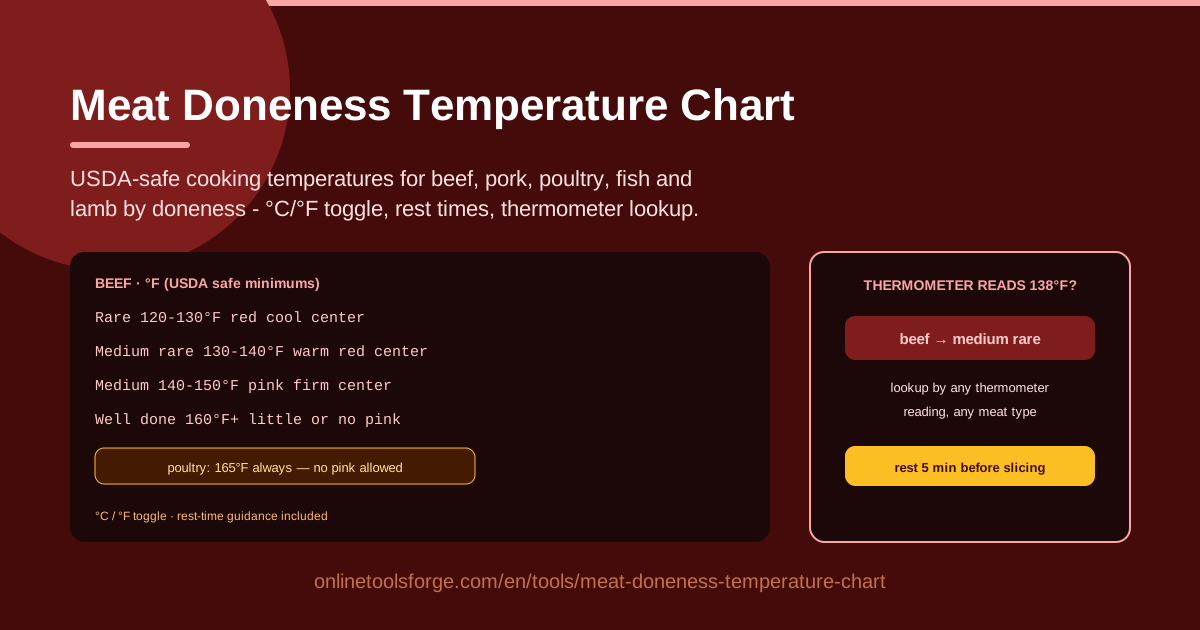
Table of Contents
Every cook eventually meets the same moment of doubt: you are standing over a hot pan, holding a beautiful piece of meat, and asking whether it is truly medium rare yet — or still raw in the middle. Guessing by color, feel or cooking time is how overcooked steaks and risky chicken dinners happen. The Meat Doneness Temperature Chart on Online Tools Forge replaces that guesswork with a clear, interactive chart built around USDA safe cooking guidance for beef, pork, poultry, fish and lamb.
Unlike a laminated card stuck to the fridge, this tool adapts to you. Toggle between Celsius and Fahrenheit depending on the recipe or thermometer in hand, read rest-time guidance for each cut, and type any thermometer reading into the built-in lookup to instantly see the matching doneness level. Everything runs fully offline, right in the browser — no signup, no ads.
In this guide we walk through how to use the chart step by step, what the doneness ranges actually mean, and why rest times and carryover cooking matter just as much as the number on your probe.
Why Use Meat Doneness Temperature Chart?
- Thermometer lookup built in: enter any thermometer reading and instantly see which doneness level it matches — a lifesaver mid-cookout when every minute counts.
- USDA safety at the core: every recommendation follows USDA safe minimum internal temperatures, so you always know the line between "perfectly pink" and "not worth the risk."
- One chart for the whole menu: beef, pork, poultry, fish and lamb are all covered, each broken down by doneness level, so you never juggle five different references.
- Celsius and Fahrenheit without mental math: recipes and thermometers often use different units; the toggle converts instantly, no separate cooking temperature converter needed.
- Rest-time guidance included: doneness is not only peak temperature — the chart reminds you how long each cut should rest so juices redistribute instead of spilling onto the board.
- Fully offline and free: no signup, no connection required — it keeps working on a phone with weak signal beside the grill or out camping.
Key Features
| Feature | What it does |
|---|---|
| Interactive doneness chart | Shows USDA-safe temperatures for beef, pork, poultry, fish and lamb, organized by doneness level from rare to well done |
| Celsius/Fahrenheit toggle | Switches units instantly so recipes in °F and recipes in °C both read naturally |
| Thermometer-reading lookup | Lets you enter any thermometer reading and tells you the corresponding doneness level |
| Rest-time guidance | Explains how long each cut should rest and why carryover cooking raises the final temperature |
| Offline operation | Runs entirely in your browser with no internet connection, accounts or tracking |
A few details worth knowing:
- The doneness rows work like a ladder from rare to well done, with both units shown side by side so you can cross-check a Fahrenheit recipe against a Celsius thermometer in seconds.
- The lookup doubles as a cooking temperature converter: enter 63 and you will see it equals about 145°F — the USDA minimum for whole cuts of beef, pork and lamb, as well as for fish.
- Every change updates instantly, so you can flick between meats and units while dinner is minutes from the table.
How to Use Meat Doneness Temperature Chart
- Pick your meat type. Open the tool and select beef, pork, poultry, fish or lamb. The chart adjusts to show that meat's safe minimum and its doneness levels.
- Toggle °C or °F. Match the unit your recipe and thermometer use so you never translate mid-cook — this prevents the classic mistake of aiming for 74°F instead of 74°C.
- Read the doneness rows. Scan from rare through well done and find the temperature band for the result you want: medium rare for a ribeye, the USDA whole-cut minimum for pork chops.
- Use the thermometer lookup. When your probe reads, say, 135°F, enter that number and confirm it sits in medium rare territory before pulling the steak — or let it climb a little longer.
- Honor the rest times. Check the rest-time guidance, pull the meat a few degrees early to allow for carryover cooking, and give it the recommended rest before slicing.
Doneness, Safety and Rest Times
USDA safe minimums come first. Poultry in every form — whole birds, breasts, thighs, wings and ground poultry — must reach 165°F (74°C). Ground beef, pork and lamb need 160°F (71°C). Whole cuts of beef, pork and lamb, plus fish, are safe at 145°F (63°C) followed by a three-minute rest. Poultry is stricter because bacteria like salmonella can be distributed throughout the muscle, while on whole cuts they live mostly on the surface.
Beef has room for preference. Within the limits of safe handling, doneness is a matter of taste: rare sits around 120-125°F (49-52°C), medium rare at 130-135°F (54-57°C), medium at 140-145°F (60-63°C), medium well at 150-155°F (65-68°C) and well done from 160°F (71°C) upward. The chart lays these bands out clearly so you choose deliberately rather than by accident.
Carryover cooking is real. Meat keeps cooking after it leaves the heat, typically climbing another 3-10°F (2-5°C) as it rests — more for large roasts. That is why experienced cooks pull steaks a few degrees below target. Resting then gives juices time to redistribute: about five minutes for steaks and chops, ten to twenty for roasts, twenty to thirty for a whole turkey.
The lookup closes the real-world gap. Your thermometer shows a single number while most charts show ranges. Instead of doing mental math at a smoky grill, enter the reading — 128°F, for example — and the tool tells you the meat is still in rare territory and needs a few more minutes.
Watch the Celsius/Fahrenheit trap. An oven set to 145°C is not the same as meat at 145°F, and 74°C is poultry-safe while 74°F is nearly body temperature. The toggle shows both units for every value, which matters more than any single number on the page.
Practical Use Cases
Steak Night Precision
You are cooking two ribeyes to medium rare. Preheat the pan hard, probe the thickest part, and pull the steaks at around 130-132°F. During the five-minute rest, carryover cooking carries them to about 135°F — exactly the medium rare band on the chart, with juices still inside the meat.
Holiday Turkey Safety
For roast turkey, the target is 165°F (74°C) in the thickest part of the thigh and the center of the breast, not touching bone. If the breast reads 158°F, the lookup confirms you still have a way to go. The twenty-to-thirty-minute rest afterwards keeps it safe and makes carving dramatically easier.
Grilling for Guests with Mixed Preferences
Four guests, four doneness levels. Burgers must hit 160°F (71°C) because they are ground meat, while steaks can be pulled in stages — one at 130°F for medium rare, one held to 145°F for medium well. With the chart open offline on your phone, you stage the pulls without leaving the grill.
Kitchen Thermometer Sanity Check
Doubting your thermometer? Test it in ice water (32°F / 0°C) and boiling water (212°F / 100°C at sea level), then enter 140°F into the lookup and confirm it lands in the medium band for beef. Two minutes of checking builds trust in every reading afterwards.
Best Practices
- Use an instant-read thermometer, not timers or color. Meat color is unreliable: smoker "smoke rings," brined chicken and thick cuts can all look done long before they are.
- Measure the thickest part. Probe the center of the thickest section, avoid bone (it conducts heat and reads high) and large fat pockets, and check thin cuts from the side.
- Pull early for carryover cooking. Remove small cuts 3-5°F below target and large roasts even earlier, then let resting finish the job.
- Rest before slicing. Five minutes for steaks, ten to twenty for roasts; tent loosely with foil rather than wrapping tightly, which softens the crust.
- When in doubt, cook poultry fully. 165°F (74°C) for all chicken and turkey, and 160°F (71°C) for any ground meat, are non-negotiable.
- Cross-check units once per session. If your recipe uses °C and your thermometer shows °F, confirm the conversion on the chart before cooking, not after.
Ready to stop guessing and start serving perfectly cooked meat every time? Open the Meat Doneness Temperature Chart, bookmark it on your phone, and let the thermometer — not luck — decide when dinner is done.
Related Tools You Might Like:
- Heart Rate Zone Calculator — find your personal training zones once you step away from the grill and back into your workouts.
- Times Table Generator — a handy study companion for the kids while dinner rests.
- Unit Converter — convert ounces, grams, cups and other kitchen units in one place.
Happy grilling!
Frequently Asked Questions
Q: What temperature is a medium rare steak? A: Medium rare beef sits at roughly 130-135°F (54-57°C). Under strict USDA guidance the safe minimum for whole cuts is 145°F (63°C) with a three-minute rest, which lands closer to medium. The chart shows both the classic doneness bands and the USDA-safe baseline so you can decide for yourself.
Q: What is the USDA safe temperature for chicken? A: 165°F (74°C) for all poultry — breasts, thighs, wings, whole birds and ground poultry alike. At that temperature salmonella is destroyed instantly. No rest is required, though letting the bird rest keeps it juicier.
Q: Does meat really need to rest, and for how long? A: Yes. Resting lets juices redistribute instead of spilling out when you cut. Steaks and chops need about five minutes, large roasts ten to twenty, and a whole turkey twenty to thirty. Expect the temperature to rise 3-10°F (2-5°C) during that time.
Q: Can I use the chart without an internet connection? A: Yes. The Meat Doneness Temperature Chart runs fully offline in your browser, with no signup or ads, so it works just as well beside the backyard grill as on a camping trip.