Sudoku Solver: Solve Any Puzzle Instantly and Generate Unique Printable Ones
Free online Sudoku solver and generator. Solve any 9x9 puzzle instantly, check whether the solution is unique, and generate printable easy, medium, or hard puzzles with exactly one solution — 100% in-browser.
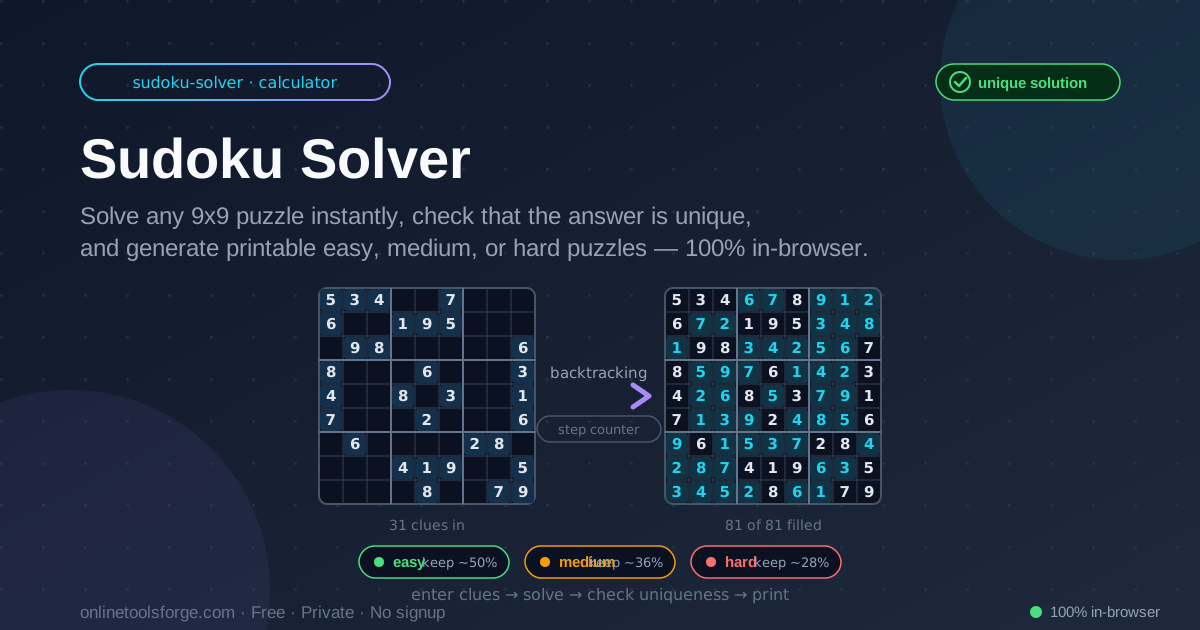
Table of Contents
Sudoku Solver: Solve Any Puzzle Instantly and Generate Unique Printable Ones
Every Sudoku player knows the moment: forty minutes in, two cells refuse to agree, and you cannot tell whether you made a mistake or the puzzle itself is flawed. The Sudoku Solver ends that doubt in a second — enter the clues, press solve, and the grid either completes or the tool tells you why it cannot.
The same page doubles as a puzzle maker: pick easy, medium, or hard, and it carves a fresh puzzle — always with exactly one solution — from a randomly built full grid, ready to print. Everything runs in your browser, and ordinary puzzles solve in milliseconds.
Why Use Sudoku Solver?
- Instant solving with a step count. Most puzzles complete before your finger leaves the button, and the tool even reports how many backtracking steps the search needed.
- A genuine uniqueness check. The solver counts solutions up to two and reports zero, unique, or multiple — the difference between verifying a grid and merely filling it.
- A generator with a guarantee. Clues are removed from a complete grid only while the answer stays unique, so every puzzle it produces has exactly one solution.
- Printable output. Generate a puzzle and print it for the train, the flight, or the coffee break.
- Private by design. Everything runs locally, so newspaper puzzles and works in progress never leave your device.
- Free and frictionless. No signup, no limits — open the page and start solving.
Key Features
| Feature | What it does |
|---|---|
| Solve mode | Completes any 9x9 puzzle from typed or pasted clues |
| Uniqueness detection | Reports zero, unique, or multiple solutions |
| Generate mode | Builds a fresh puzzle with exactly one solution |
| Difficulty control | Easy keeps about half the clues, medium a third, hard about 28% |
| Import and copy | Paste an 81-character puzzle, copy the result back out |
| Printable output | Print the puzzle or the solution from the browser |
| 100% in-browser | Nothing is uploaded; all computing happens on your device |
- The counter stops at two: knowing there is more than one answer is all a solver needs, and stopping early keeps the check instant.
- The one-solution guarantee is enforced during generation — any removal that would open a second answer is quietly put back.
How to Use
- Open the tool. Go to the Sudoku Solver and stay on the Solve tab.
- Enter your puzzle. Type digits into the cells, or paste the whole grid as text and import it.
- Press solve. A valid puzzle fills instantly; the status line reports solved, no solution, or multiple solutions.
- Or switch to Generate. Pick easy, medium, or hard, and a fresh unique-solution puzzle appears in the same grid.
- Print, copy, or reset. Print the grid, copy it as text, or clear it and start again.
Backtracking and Difficulty
How backtracking works
Backtracking is systematic trial and error. The solver finds the first empty cell, tries the digit 1, and checks the row, column, and box. Conflicts mean it tries 2, then 3. When a digit fits, the solver recurses to the next empty cell and repeats. When no digit fits, it undoes the last choice and tries the next one in the previous cell. This try-recurse-undo loop walks the search backwards out of dead ends, and the row, column, and box constraints prune options so aggressively that ordinary puzzles fall in milliseconds. The step counter simply counts placed digits.
Why uniqueness matters
A real Sudoku has exactly one solution; that is what makes deduction possible at all. The counter therefore reruns the search without stopping at the first answer, continuing just long enough to see whether a second exists. Zero solutions means the clues contradict each other, almost always a typo. Multiple solutions means the grid is under-clued and guesswork becomes unavoidable. Exactly one means pure logic can settle every cell — which is what makes a puzzle fair.
How the difficulty dial works
The generator fills a complete grid by randomized backtracking, then removes clues in random order, re-checking uniqueness after each removal and restoring any clue whose removal would allow a second answer. The keep fraction sets the target: easy keeps about half of the 81 cells — roughly 40 given digits — medium around a third, and hard only about 28%, or roughly 23 clues. Fewer clues mean longer deduction chains, which is exactly what players experience as difficulty.
Machine order versus human order
Humans solve by pattern, scanning for nearly complete rows, columns, and boxes; machines fill cells in a fixed order and dive into branches no person would consider. That is why a solver cracks in milliseconds a puzzle that resists an expert for half an hour. Use the solver for answers and verification — use the dial to choose your fight.
Practical Use Cases
Verifying hand-solved puzzles
Finish a newspaper puzzle, enter its clues, and a unique-solution verdict confirms the grid was fair. Comparing the solver's answer against yours pinpoints the exact cell where your logic diverged.
Creating puzzle books and worksheets
Teachers and self-publishers can generate a batch at mixed difficulties and print a booklet in minutes. Every puzzle keeps exactly one solution, so no reader ever hits an ambiguous grid.
Teaching recursion and search
Backtracking is the classic first example of recursion. Students watch the tool solve a grid, then reason about the step counter: why easy puzzles take fewer steps, and sparse grids far more.
Daily brain training
Print an easy puzzle for breakfast and a hard one for the commute. Generating your own means an endless supply, scaled to the time you have.
Best Practices
- Double-check entered clues. One transposed digit turns a solvable puzzle into a no-solution verdict — re-read entries before doubting the source.
- Prefer unique-solution puzzles. Multiple solutions mean the grid rewards scanning rather than logic.
- Print for offline play. A printed grid and a pencil still beat a screen for focus.
- Use paste-import for long puzzles. Copying the string is safer than retyping thirty clues.
- Read the status message first. A filled grid from a multiple-solution puzzle is one answer among many.
- Match difficulty to your energy. Easy resolves quickly; hard, at about 28% of clues, demands real deduction.
Solve Your Next Grid in Seconds
Stuck on a stubborn grid, checking whether yesterday's puzzle was fair, or building printable challenges for the weekend? The Sudoku Solver handles it instantly, privately, and for free — paste your clues and see the answer before your coffee cools.
Related Tools You Might Like:
- Printable Calendar Generator — schedule and print the month your puzzle club meets.
- Spin the Wheel — let a random spin pick your next difficulty.
- Random Number Generator — draw random digits for homemade Sudoku variants.
Happy solving!
Frequently Asked Questions
Q: Can the solver handle any 9x9 Sudoku, including hard ones? A: Yes. Backtracking with row, column, and box constraints solves every valid Sudoku, and typical puzzles complete in milliseconds.
Q: What does it mean when a puzzle has multiple solutions? A: The clues are consistent but under-specified, so more than one grid fits them and pure logic cannot finish the puzzle. If you copied it from print, check your entries first — a missing clue is the usual culprit.
Q: How does the generator guarantee exactly one solution? A: It fills a complete grid, removes clues in random order, and restores any removal that would create a second answer — so every difficulty keeps exactly one solution.
Q: How many clues do easy, medium, and hard puzzles keep? A: Easy keeps about half of the 81 cells (roughly 40 given digits), medium about a third, and hard about 28% — roughly 23 clues. Fewer clues force longer deduction chains, which is what players feel as difficulty.