Cat Age Calculator: Convert Cat Years to Human Years
Find out how old your cat really is. Convert cat years to human-equivalent years with the modern growth model and see the matching life stage from kitten to geriatric.
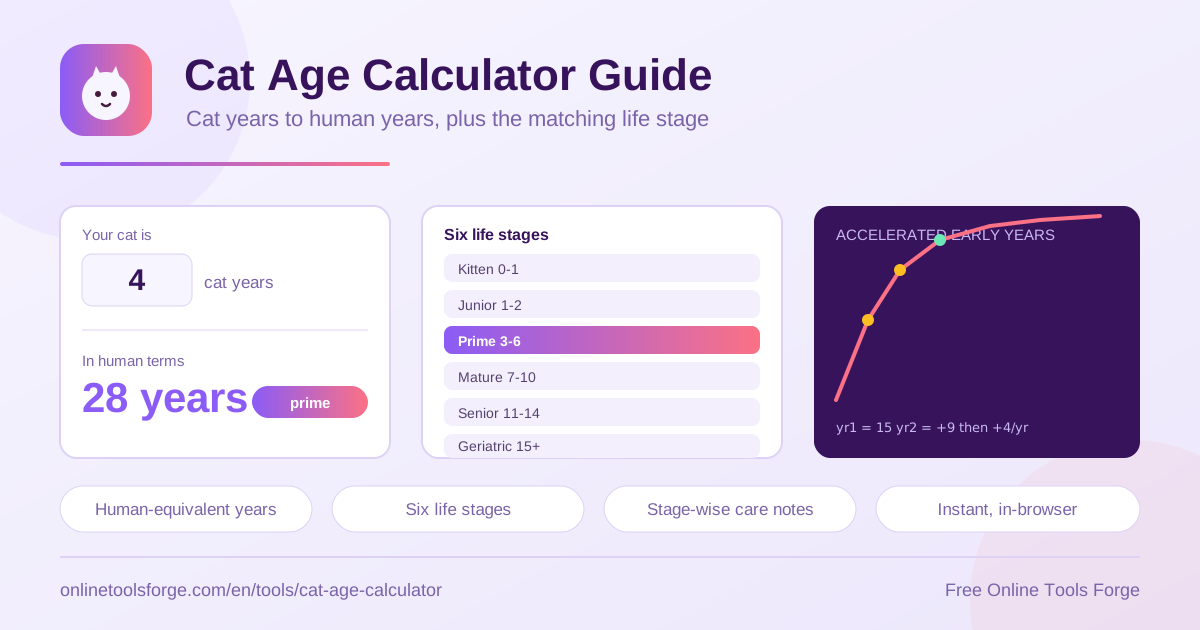
Table of Contents
Every cat owner eventually wonders about it: my tabby is seven — what does that actually mean for her? Cats do not age at a steady, human-like pace. They sprint through development in their first two years, then settle into a much slower rhythm. Translating cat years to human years is the clearest way to understand where your cat stands and what she needs from you next.
The free cat age calculator makes the conversion instant. Enter your cat age and the tool returns a human-equivalent number plus the matching life stage — kitten, junior, prime, mature, senior, or geriatric. It runs 100% in your browser, with no signup and nothing uploaded anywhere.
In this guide you will learn why the familiar "multiply by seven" rule fails, how the modern model actually works, and how each life stage should shape vet visits, diet, and play.
Why Use the Cat Age Calculator?
- Skip the guesswork. Mental math invites mistakes; the tool applies the accepted model where the first year equals about 15 human years and the second adds another 9.
- Get a life stage, not just a number. Knowing your cat is 11 matters because of what it implies: she has entered the senior stage, where screening and diet changes start to matter.
- Respect accelerated early growth. Cats mature far faster than a flat yearly rate suggests — a 1-year-old cat is already a young adult in human terms.
- Plan vet visits proactively. Each stage carries a recommended checkup frequency, so converting age helps you book appointments before problems appear.
- Free, instant, and private. The calculator runs entirely in the browser, delivers results as you type, and stores nothing.
- Handy for multi-cat homes. Compare a 3-year-old with a 13-year-old and you immediately see how differently their needs are evolving.
Key Features
| Feature | What it does |
|---|---|
| Age input in years | Enter your cat age in years and get the human-equivalent value instantly |
| Modern conversion model | Year one ≈ 15 human years, year two adds ≈ 9, then ≈ 4 per year |
| Six life-stage mapping | Places the result in kitten, junior, prime, mature, senior, or geriatric |
| Life-stage table | Shows the full ladder so you can see where your cat sits now and what comes next |
| Instant results | Everything computes in the browser — no accounts, uploads, or waiting |
- The life-stage badge is the most actionable output: it turns a raw number into a care category you can act on the same day.
- Because the tool is fully client-side, it keeps working offline once loaded and never records your input.
- The same model covers every age, from a 6-month-old kitten to a 20-year-old elder.
How to Convert Cat Age to Human Years
- Open the cat age calculator in any browser.
- Type your cat age in whole years — for example, 4.
- Read the human-equivalent result: a 4-year-old cat is about 32 in human years (15 + 9 + 8).
- Check the matching life stage — 4 years falls in the prime stage.
- Scan the life-stage table to see which stage comes next, then adjust vet visits, food, and play accordingly.
The Six Cat Life Stages
The first two cat years are wildly accelerated. A kitten is born helpless and, within twelve months, reaches sexual maturity and near-adult size — development that takes humans well over a decade. That is why year one counts as roughly 15 human years and year two adds 9 more. After that, growth slows and each additional cat year is worth about 4 human years.
The old advice to multiply by 7 is simply wrong. It assumes a constant rate, but cat aging is front-loaded. A 1-year-old cat is not 7 in human terms — she is about 15. A 10-year-old is not 70 — closer to 56. The 7-year myth also misses the life stages entirely, and the stages are what drive care decisions.
Human years ≈ 15 (first year) + 9 (second year) + 4 × each extra year
Example: a 6-year-old cat = 15 + 9 + (4 × 4) = 40 human years
Kitten (0–1 year ≈ 0–15 human years). Pure growth mode: vaccinations on a strict schedule, a spay or neuter discussion, litter and scratching training, and constant socialization. Feed energy-dense kitten food, and use short, frequent play sessions to burn the zoomies safely.
Junior (1–2 years ≈ 15–24 human years). The teenager. Physical growth is finishing but behavior is still settling. Transition to adult food near the end of this stage, keep annual checkups, and ask your vet for a baseline dental exam.
Prime (3–6 years ≈ 28–40 human years). Peak years: strong, athletic, and usually healthy. Annual vet visits, consistent weight checks, and daily play keep it that way. Dental disease often starts quietly here, so brushing or dental treats pay off.
Mature (7–10 years ≈ 44–56 human years). Subtle changes begin: metabolism slows, weight creeps up, and early kidney or thyroid issues can appear. This is the stage to discuss baseline bloodwork and watch food intake closely.
Senior (11–14 years ≈ 60–72 human years). Think of a person in their sixties. Twice-yearly vet visits, regular bloodwork, and blood-pressure checks become standard. Watch for arthritis, increased thirst, and litter-box lapses, and consider joint-support and senior diets.
Geriatric (15+ years ≈ 76+ human years). Care shifts toward comfort: softer bedding, easy-access litter boxes, gentle grooming help, and vet visits every few months when needed. Many cats live happily well into this stage with attentive management.
Practical Use Cases
Planning Vet Visits by Stage
A 9-year-old cat converts to about 52 human years — solidly mature. Use that framing at your next appointment to discuss baseline screening before problems appear, then plan twice-yearly visits once she crosses 11 (≈60 human years) and enters senior territory.
Adopting a Rescue of Unknown Age
Shelters often estimate age within a range. Converting that estimate into human terms makes it tangible: a "maybe 2 or 3" rescue is 24–28 in human years — an energetic young adult, not a mellow companion. That shapes your expectations for play, feeding, and training during the first months together.
Adjusting Diet and Play by Stage
Kittens need calorie-dense kitten food and frequent meals; prime adults need portion control to prevent slow weight gain; seniors often benefit from diets that support kidneys and joints. Play follows the same logic: a junior cat may chase a laser toy for twenty minutes, while a geriatric cat prefers short wand-toy sessions on a soft surface.
Deciding When to Start Senior Screening
If your cat is 10 (≈56 human years), the senior stage is one birthday away. That is the moment to book bloodwork, a thyroid check, and a blood-pressure reading rather than waiting for symptoms. Early detection of kidney disease or hyperthyroidism changes outcomes dramatically.
Best Practices
- Recheck every birthday. After age 2, each cat year adds about 4 human years, so a cat can cross a stage boundary faster than you expect.
- Treat the stage as a guide, not a diagnosis. Individuals vary — breed, weight, and health history all matter.
- Pair the number with a vet exam. The conversion frames the conversation; your vet confirms what the body is actually doing.
- Watch for early transitions. Some cats show senior changes at 10 rather than 11 — respond to the cat, not just the chart.
- Use the same tool each year so your comparisons stay consistent over time.
- Note the date you checked. Next year you will know exactly which birthday applies and which stage is coming next.
Ready to See Your Cat in Human Years?
Your cat is aging in fast-forward during those early years, then steadily ever after. Knowing her human-equivalent age — and the life stage that comes with it — is the simplest way to stay one step ahead. Open the cat age calculator, enter her age, and see exactly where she stands today.
Related Tools You Might Like:
- Dog Age Calculator — the same accelerated growth model for dogs
- Age Calculator — exact human ages down to the day
- Ideal Weight Calculator — healthy weight targets for people and pets
Happy whiskers!
Frequently Asked Questions
Q: How do I convert cat years to human years? A: Give the first year 15 human years, the second another 9, then add about 4 for every year after that. The cat age calculator applies this model instantly and shows the matching life stage.
Q: Is the "multiply by 7" rule accurate? A: No. It assumes cats age at a constant rate, but they mature very quickly early on and slow down later. A 1-year-old cat is about 15 in human terms, not 7.
Q: What stage is a 10-year-old cat in? A: Mature, which spans ages 7 to 10 (about 56 human years at the top). The senior stage begins at 11, or roughly 60 human years.
Q: Do indoor cats age differently from outdoor cats? A: The conversion model is the same, but lifestyle affects health and lifespan. Indoor cats more often reach senior and geriatric ages, which makes stage-based care even more valuable.
Q: Is the cat age calculator free to use? A: Yes. It is 100% free, runs entirely in your browser, and requires no signup or personal data.