Dog Age Calculator: Convert Dog Years to Human Years the Right Way
Convert your dog age to human years with a modern size-based formula for small, medium, large, and giant breeds, plus life stage estimates and a full reference table.
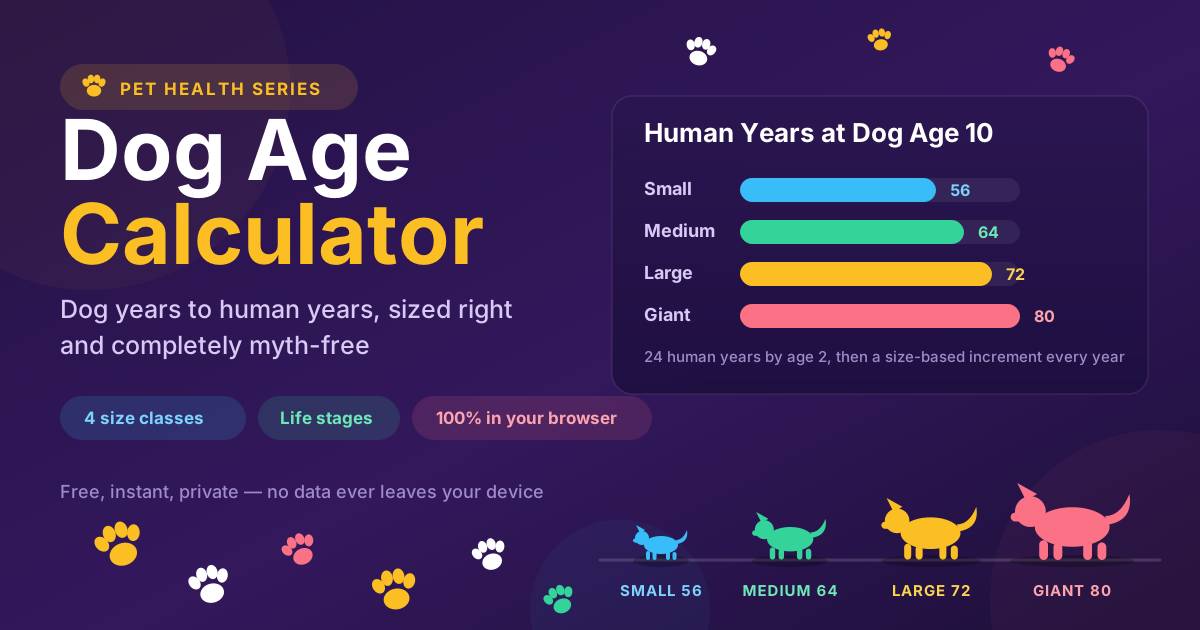
Table of Contents
Dog Age Calculator: Convert Dog Years to Human Years the Right Way
Every dog owner has heard the old rule: one dog year equals seven human years. It is tidy, memorable, and mostly wrong. A one-year-old puppy can already learn commands and jog for miles — no seven-year-old human can. Our free Dog Age Calculator replaces the myth with a modern, size-based formula that reflects how breeds really age.
The tool takes two inputs — your dog's age and its size class (small, medium, large, or giant) — and instantly converts them into an estimated human age. It also reports the likely life stage, from puppy to geriatric, using thresholds that shift with size, plus a reference table of the whole aging curve.
Everything runs entirely in your browser — no sign-up, no tracking, and no data ever leaves your device.
Why Use the Dog Age Calculator?
- It ditches the multiply-by-seven myth. The old shortcut understates how fast young dogs mature and how differently breeds age.
- Size-aware results. Small, medium, large, and giant breeds follow different aging curves, with yearly increments adjusted per class.
- Life stage estimates included. You learn whether your dog is best treated as a puppy, adult, senior, or geriatric — the labels vets actually use.
- A reference table for planning. See the full conversion curve for your dog's size class, not just today's figure.
- Instant, private, and free. Results appear as you type, every calculation happens client-side, and no account is needed.
Key Features
| Feature | What It Does |
|---|---|
| Size-based formula | Adds 4 to 7 human years per dog year after age two, matched to size class |
| Four size classes | Small, medium, large, and giant breeds each get their own curve |
| Human-year conversion | Translates any dog age into an estimated human equivalent |
| Life stage estimate | Labels your dog puppy, adult, senior, or geriatric using size-specific cutoffs |
| Reference table | The full age-by-age conversion at a glance |
| Client-side privacy | Computes everything in your browser; nothing is collected |
- The increments match veterinary convention. The first year counts as roughly 15 human years, the second adds 9, and the size increment applies from year three.
- Life stage thresholds move with size. A seven-year-old Great Dane is a senior, while a seven-year-old Chihuahua is barely middle-aged.
- One page, the whole picture. Conversion, life stage, and reference table sit together.
How to Use the Dog Age Calculator
- Open the tool. Head to the Dog Age Calculator page — it loads instantly.
- Enter your dog's age. Type the age in years (decimals are fine, so 2.5 works for a young adult).
- Pick the size class. Choose small, medium, large, or giant based on breed and expected adult weight.
- Read the results. The tool shows the estimated human age, the likely life stage, and how the first two years are counted.
- Scan the reference table. See how your dog will convert in future years, or look up other ages for planning.
That is the whole workflow.
Why the 7-Year Myth Is Wrong
The multiply-by-seven rule began as a rough comparison decades ago and has been repeated ever since. Real canine aging looks nothing like a constant sevenfold rate.
Dogs sprint through their first two years. The modern formula values the first year at about 15 human years and the second at 9, putting a two-year-old at roughly 24 in human terms — by their second birthday most dogs are sexually mature, nearly fully grown, and acting like young adults. A flat 7:1 rule would call that same dog just 14.
After year two, aging slows and splits by size. Each later dog year adds a fixed number of human years that depends on the size class. Small dogs age most slowly and live longest; giant breeds age fastest. The thresholds the calculator uses:
| Size class | Human years added per dog year (after age 2) | Senior from | Geriatric from |
|---|---|---|---|
| Small | +4 | 10 | 13 |
| Medium | +5 | 9 | 12 |
| Large | +6 | 8 | 11 |
| Giant | +7 | 7 | 10 |
Bigger means older, faster. A giant breed is considered geriatric at 10 dog years, a small breed not until 13. The same birthday can mean middle-aged for a beagle and elderly for a mastiff.
Life stages, per size class. The calculator maps every result onto four stages: puppy covers the rapid growth phase, adult is the stable middle, senior begins at the threshold above, and geriatric marks the final stage where comfort and monitoring matter most.
A worked example. A 10-year-old small dog converts to about 56 human years — senior, not geriatric. A 10-year-old giant dog converts to about 80 — firmly geriatric. Identical birthdays, different care needs.
Practical Use Cases
Vet Visits and Senior Screening
Vets recommend baseline senior screenings — bloodwork, blood pressure, dental checks — at different ages depending on size. Converting the age first tells you whether that conversation starts this year or can wait, and knowing a giant breed is functionally in his eighties changes the questions you ask.
Switching Nutrition by Life Stage
Puppy formulas, adult diets, and senior blends exist for good reasons. The life stage estimate signals when to transition food — earlier for large and giant breeds, later for small ones — instead of guessing from one-size packaging.
Adoption Paperwork and Shelter Records
Shelter intakes and adoption contracts often ask for an estimated age and life stage. A size-based conversion gives an honest figure for a rescue whose birthday nobody knows, and shows adopters what to expect from a dog senior in giant-breed terms at only seven.
Pet Insurance Timing
Many policies adjust premiums, waiting periods, or coverage as pets cross into senior status. Knowing the size-adjusted senior age helps you compare policies, lock in coverage before steep jumps, and budget for high-claim years.
Best Practices
- Pick the size class honestly. Judge by expected adult weight for the breed, not how chubby or slim your dog currently is.
- Recheck the conversion yearly. Dogs cross thresholds fast, especially large breeds.
- Treat estimates as estimates. The formula models populations, not individuals; pair the number with your vet's judgment.
- Use the reference table. Looking two or three years ahead turns a conversion into an actual care plan.
- Use life stage language with your vet. Saying "she is senior by giant-breed standards" communicates more than "she is seven."
- Remember lifestyle still matters. Diet, dental care, and exercise nudge the curve in both directions.
Try It With Your Own Good Boy or Girl
Numbers are more convincing with fur attached. Open the Dog Age Calculator, enter your companion's age and size, and see the human-year estimate and life stage in seconds.
Related Tools You Might Like:
- Age Calculator — your own exact age in years, months, and days.
- BMI Calculator — check body mass index for the human half of the household.
- Ideal Weight Calculator — set a healthy target weight for humans, too.
Here's to many more happy, healthy years together — however you count them.
Frequently Asked Questions
Q: Is the 7-year rule for dog years accurate?
A: No. Dogs reach young adulthood within two years — about 24 human years in the modern formula — and after that aging depends heavily on size. A flat 7:1 ratio misses both facts.
Q: How do I know which size class to choose for a mixed breed?
A: Estimate the expected adult weight: under 10 kilograms is roughly small, 10 to 25 medium, 25 to 45 large, above that giant.
Q: At what age is a dog considered senior?
A: Small breeds are senior at 10 dog years, medium at 9, large at 8, and giant at 7 — the bigger the breed, the earlier old age arrives.
Q: Does the calculator work for puppies?
A: Yes. Puppies convert at the steep early rate, so a one-year-old puppy is about 15 in human years.
Q: Is my data stored anywhere?
A: No. Every calculation runs client-side in your browser. Nothing is uploaded, logged, or shared.