Sleep Cycle Calculator: Find Your Best Bedtime and Wake-Up Time
Plan smarter sleep with the Sleep Cycle Calculator. Work in 90-minute sleep cycles, add a fall-asleep buffer, and wake at the end of a cycle instead of the middle — fully offline.
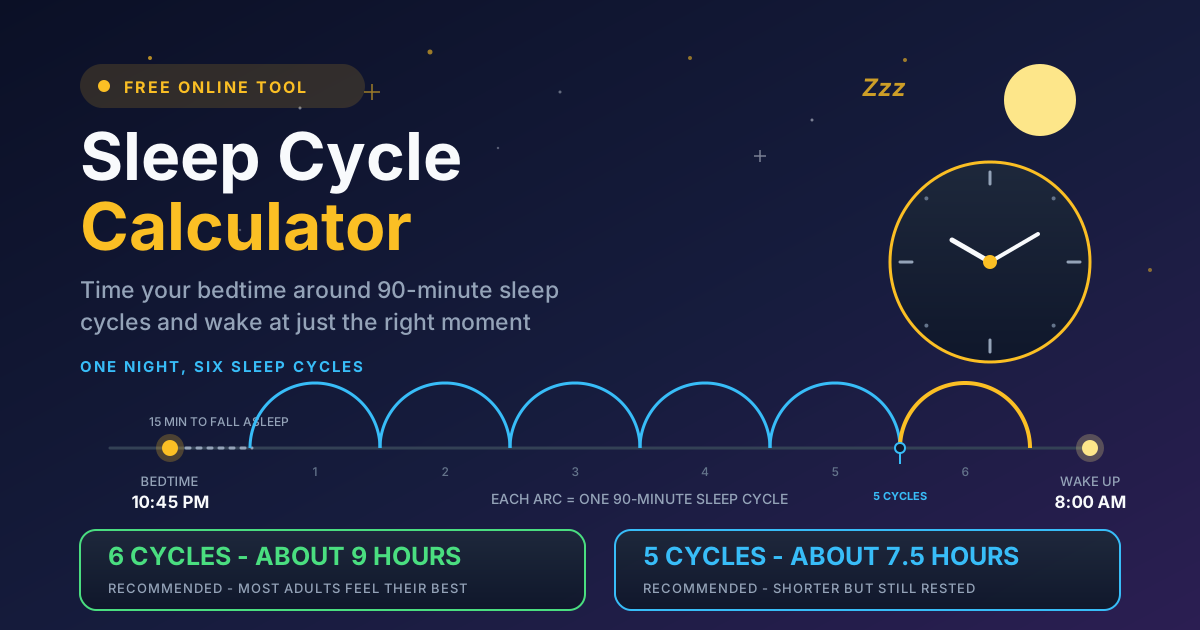
Table of Contents
Sleep Cycle Calculator: Find Your Best Bedtime and Wake-Up Time
Ever slept a solid eight hours and still woken up foggy? The culprit is usually timing, not duration: your alarm fired in the middle of a deep sleep cycle. The Sleep Cycle Calculator fixes this at the source — enter your wake-up time or bedtime, and it suggests schedules that land on the natural end of a sleep cycle.
Sleep moves in repeating waves of roughly 90 minutes — light sleep, deep sleep, then REM — and waking at the end of a wave feels far easier than being dragged from its middle. Instead of guessing at bedtimes, you get a short list of options calculated for your exact schedule.
The tool is free, needs no sign-up, and works fully offline. Everything runs in your browser, so your schedule never leaves your device, and results update instantly as you adjust the settings.
Why Use Sleep Cycle Calculator?
- Wake at the end of a cycle, not in the middle. Alarms on a cycle boundary catch lighter sleep, so mornings feel easier than being jolted out of deep sleep.
- Two directions of planning. Wake-at mode suits a fixed morning alarm; sleep-now mode finds the smartest alarm after a late bedtime.
- Adjustable cycle length. The 90-minute default is an average, not a law — tune it to match your own body.
- A built-in fall-asleep buffer. About 15 minutes are added automatically to convert lights-out time into true sleep time.
- Recommendations, not a wall of numbers. The 6-cycle (about 9 hours) and 5-cycle (about 7.5 hours) options are highlighted as the first picks for most adults.
- Fully offline and private. No account, no tracking — the page keeps working anywhere without signal.
Key Features
| Feature | What It Does |
|---|---|
| Wake-at mode | Suggests bedtimes for 6 down to 3 sleep cycles |
| Sleep-now mode | Suggests wake-up times for 6 down to 3 sleep cycles |
| 90-minute default cycle | The widely cited average, ready to use out of the box |
| Adjustable cycle length | Fits individual differences in your own sleep |
| Fall-asleep buffer | Adds about 15 minutes for the time it takes to drift off |
| Recommended highlights | Flags the 6-cycle and 5-cycle results first |
| Works offline | Runs entirely in the browser, no connection needed |
- Short-night options too. You also get 4-cycle (about 6 hours) and 3-cycle (about 4.5 hours) results for unavoidable late nights when you at least want to wake between cycles.
- Transparent arithmetic. Bedtime equals wake time, minus cycles times cycle length, minus the buffer — any suggestion can be verified in seconds.
How to Use
- Open the tool. Go to the Sleep Cycle Calculator page — it loads instantly on any device.
- Choose your mode. Pick wake-at mode for a fixed alarm; pick sleep-now mode when you are heading to bed late.
- Enter your time. Type the time you must get up in wake-at mode, or the time the lights go off in sleep-now mode.
- Adjust the settings if needed. Keep the 90-minute default or change it. The 15-minute fall-asleep buffer applies automatically; extend it on restless nights or shorten it if you drop off fast.
- Pick a highlighted option. Aim for 6 cycles (about 9 hours) or 5 cycles (about 7.5 hours) first; if neither fits, take the longest that does — and always end on a complete cycle.
The 90-Minute Idea
A sleep cycle is one pass through the stages of sleep: light sleep, where muscles relax and the brain slows; deep sleep, when the body repairs tissue and waking is hardest; then REM, where dreams happen and emotional memories are consolidated. One lap averages about 90 minutes and repeats four to six times a night, with early cycles favoring deep sleep and later ones carrying more REM.
This explains why waking mid-cycle feels so bad. An alarm during deep sleep brings sleep inertia — grogginess that can last an hour. At a cycle boundary you are already surfacing toward lighter sleep, so waking takes far less effort. Same hours, better-timed ending: that is the whole premise of the calculator.
The 15-minute fall-asleep buffer covers the gap between getting into bed and actually sleeping. Latency varies, but a quarter of an hour is a fair default; without it, every suggested bedtime would be quietly optimistic.
The 90-minute figure is a population average; real cycles commonly run from about 70 to 120 minutes, which is why the length is adjustable. If you often wake just before the alarm feeling fine, your cycles are probably shorter — tighten the setting and compare mornings.
Why highlight 6 and 5 cycles? Six cycles is about 9 hours, the top of the 7 to 9 hours most adults need; five gives about 7.5 hours, the sweet spot for an early alarm. Four and 3 cycles are for emergencies, not habits. One honest caveat: these averages drift with age, stress, and alcohol, so treat the suggestions as a starting point, not a medical prescription.
Practical Use Cases
Fixed Morning Alarms
Most people control when they sleep, not when they wake. If your day starts at 6:30, lights-out at 9:15 PM gets you there after six full cycles including the buffer, and 10:45 PM does it after five — a concrete minute beats a vague intention.
Shift Workers and Rotating Schedules
Nurses, factory workers, and hospitality staff rarely repeat a bedtime. Whenever a rotation flips your sleep window, run both modes — new wake time for a bedtime, or planned bedtime for the best alarm. A cycle-aligned alarm softens an unnatural schedule.
Nap Planning
A nap works best either under about 20 minutes or as one complete cycle. In sleep-now mode, the 90-minute result gives the exact alarm for a full-cycle nap — real recovery without waking from deep sleep with a headache.
Exam Week and Deadline Sprints
Trading sleep for study backfires when exhaustion erases what you revised. Around 5 cycles preserves REM, which supports memory consolidation. Map the week in advance: which nights get 6 cycles, which get 5, and which late night at least ends on a cycle boundary.
Best Practices
- Consistency beats perfect math. Identical sleep and wake times daily train your body clock more than one well-calculated night.
- Always allow the buffer. If you drop off instantly, the spare minutes become easy light sleep; cutting them risks waking a cycle short.
- Add a wind-down routine. Dim lights and no screens for the last half hour keep the fall-asleep estimate honest.
- Mind evening inputs. Late caffeine, heavy meals, and alcohol distort cycle structure and quietly break even perfect timing.
- Experiment for a week. Adjust the cycle length once if mornings stay heavy; let your own pattern guide the settings.
- Treat it as guidance, not medicine. Persistent insomnia despite enough hours deserves a doctor.
Start Sleeping in Whole Cycles Tonight
Better mornings are decided the night before. Open the Sleep Cycle Calculator, enter tomorrow's alarm, and hold one of the highlighted bedtimes for a week — the tool is free, instant, and fully offline.
Related Tools You Might Like:
- Sunset Sunrise Calculator — Anchor your sleep schedule to natural light.
- Moon Phase Calculator — Follow the phases of the night sky above your bedtime.
- Water Intake Calculator — Pair good sleep with proper daily hydration.
Sleep well, wake refreshed, and let the cycles do the counting.
Frequently Asked Questions
Q: Does the Sleep Cycle Calculator need an internet connection?
A: No. Once loaded, everything runs offline in your browser and nothing is sent to a server.
Q: Is the 90-minute cycle length exact for everyone?
A: It is a widely used average; real cycles commonly run between about 70 and 120 minutes. Adjust the setting if mornings consistently feel off.
Q: Why do suggested bedtimes include an extra 15 minutes?
A: That is the fall-asleep buffer. It turns lights-out time into the moment sleep actually begins, keeping the cycle math honest instead of optimistic.
Q: Should I aim for 6 cycles or 5 cycles?
A: Prefer 6 cycles (about 9 hours) when your schedule allows, and 5 cycles (about 7.5 hours) on tighter nights — both fit the 7 to 9 hours most adults need.
Q: Can it help me plan naps?
A: Yes — sleep-now mode finds the alarm for one full 90-minute cycle; otherwise keep the nap under 20 minutes.