Decking Calculator: Estimate Boards, Joists and Screws Before You Build
Plan your deck with the free Decking Calculator — estimate deck boards, joists and screws from your deck dimensions, with waste allowance and cost totals, all client-side.
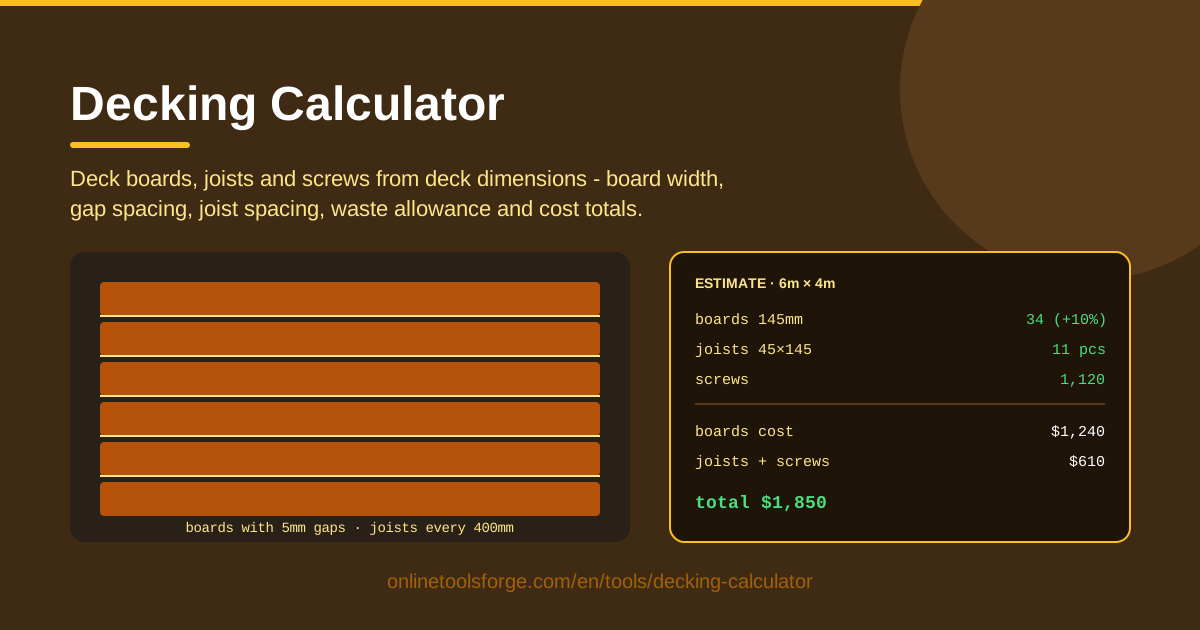
Table of Contents
Building a deck is one of the most satisfying DIY projects there is, and it lives or dies on the shopping list. Order too few boards and you are back at the lumber yard mid-build; order too many and the budget evaporates before the first barbecue. The Decking Calculator turns your deck dimensions into precise counts of boards, joists and screws in seconds.
Everything runs client-side in your browser. Enter the deck's length and width, then fine-tune board width, gap spacing, board length, joist spacing and a waste allowance. Add your prices and the tool returns totals for deck boards, joists and screws alongside cost totals for boards and joists. No sign-up, no spreadsheet, no guesswork.
This guide walks through the calculator step by step, explains the carpentry behind the numbers — effective board coverage, why gaps matter, the 400 mm joist rule — and puts the estimates to work across four real-world projects.
Why Use Decking Calculator?
- Board counts based on effective coverage. The tool divides the deck by board width plus gap, so counts reflect what actually fits rather than an optimistic raw-width estimate.
- Joist quantities from real spacing. Set the joist spacing and the calculator works out how many framing members your deck span needs, ends included.
- Screw estimates included. Two screws per board at every joist crossing adds up fast; the tool totals the fasteners so nothing is forgotten.
- Waste allowance built in. Cuts, splits and defects are inevitable. A configurable waste percentage inflates every total so you buy realistically the first time.
- Cost totals before you shop. Enter prices per board and per joist and see the material cost for both, so the budget is fixed before checkout.
- Instant and private. All math runs client-side in your browser — nothing uploads anywhere, and results update as you type.
Key Features
| Feature | What it does |
|---|---|
| Deck dimensions | Enter the overall length and width of your deck footprint. |
| Board width and gap spacing | Sets the effective pitch per board across the deck. |
| Board length | Choose the stock length your boards come in to plan joints. |
| Joist spacing | Defines how far apart framing members sit under the boards. |
| Waste allowance | Adds a percentage buffer for cuts, defects and mistakes. |
| Screw estimate | Totals fasteners from the board and joist counts. |
| Cost totals | Multiplies board and joist quantities by your prices. |
- One pass covers three materials at once — deck boards, joists and screws — replacing three separate calculations.
- Change any input, such as joist spacing, and boards, screws and costs recalculate together, making trade-offs easy to compare.
- Because the math is pure client-side, the tool works offline once loaded and never stores your project data.
How to Use Decking Calculator
- Enter deck dimensions. Measure the length and width of the planned deck and type them in — even a rough rectangle is enough to start.
- Set board width and gap. Enter the nominal board width (140 mm or 5.5 in is typical for softwood decking) and the gap between boards, usually 4-6 mm.
- Choose board length and joist spacing. Pick the stock length you plan to buy and set the joist spacing; 400 mm is the classic rule of thumb for standard boards.
- Add waste allowance. Enter 5-10% depending on complexity — diagonal layouts and decks with many cuts deserve the higher figure.
- Read the totals. The calculator returns board counts, joist counts, screw totals and cost estimates for boards and joists. Tweak any input, watch the numbers update, then buy with confidence.
Boards, Gaps and Joists Explained
Effective coverage per board is the idea that drives everything. A 140 mm board with a 5 mm gap does not cover 140 mm of deck — it consumes 145 mm of layout, because the gap belongs to the pitch. Divide the deck width by that effective coverage and you get the true number of rows. Get it slightly wrong and a 30-board deck quietly becomes 34, which is exactly the mistake the calculator prevents.
Gap spacing matters for more than counting. Gaps let rainwater drain through instead of pooling, and they give boards room to swell and shrink with the seasons. Leave them too tight and wood decking cups, buckles and holds water against the joists; leave them too wide and the surface catches heels. Four to six millimetres is the sweet spot for most wood decking.
Board length choices shape both the look and the waste pile. If the deck run is 4 m and you buy 4 m boards, every row is a single piece with zero end joints — clean lines and minimal offcuts. Shorter stock forces end joints, which should be staggered so they never land on the same joist, and every joint eats a little extra material.
The 400 mm joist spacing rule of thumb exists for good reason. Standard softwood decking around 25 mm thick feels solid between joists set 400 mm apart — roughly 16 inches. Composite boards are often less rigid and many manufacturers call for 300-400 mm, while diagonal layouts benefit from the tighter end. Tighter spacing means more joists, so it pays to check your span tables before committing.
Screw counts per board follow a simple pattern: two screws wherever a board crosses a joist. A row spanning nine joists needs 18 screws, and once you multiply by every row on the deck the total climbs into the hundreds — which is why the screw estimate lives in the tool rather than in your head.
Waste allowance is where estimates meet reality. Damaged ends, saw kerf and the occasional split board are all part of the job. Five percent suits simple straight-laid decks using full-length boards; ten percent covers diagonal patterns, cutouts around posts and first-time builders.
Practical Use Cases
Ground-Level Patio Deck
Picture a 4 m by 3 m patio deck with boards running along the long side. The calculator divides the 3 m width by the 145 mm pitch of a 140 mm board plus 5 mm gap and lands on 21 rows. Nine joists at 400 mm spacing span the 3 m side, each 4 m long. Screws come to 21 x 9 x 2, or 378. Add eight percent waste and the whole shopping list is settled in one pass.
Raised Deck Frame Planning
A raised deck lives or dies on its frame. Run the estimate with your chosen joist spacing to size the framing before you even think about surface boards — the joist count and cost total tell you what the skeleton costs, and the board count tells you what goes on top. Comparing the two figures often shows the frame is half the project budget.
Composite vs Wood Comparison
Composite and wood rarely share the same inputs. Composite boards come in different widths, often demand tighter joist spacing and cost several times more per board. Run the same deck dimensions twice with different board widths, gap settings and prices, and the cost totals put the true price gap on the table before you fall in love with either material.
Replacing Rotten Boards
Repairs benefit from the same math at a smaller scale. Measure the damaged section, enter its dimensions with the board width and gap matching the existing deck, and the calculator returns the exact number of replacement boards and screws. Because replacement rows are short, you can drop the waste allowance and buy precisely what the patch needs.
Best Practices
- Buy one extra board. A spare covers a bad cut today and matches the dye lot if you ever need a repair years from now.
- Stagger end joints. Where boards must be joined, offset the joints row to row so they never line up on the same joist.
- Check local codes for joist spans. Span tables vary by species, timber size and load rules in your area — treat the joist count as a layout guide, not a structural approval.
- Use coated or stainless screws. Plain fasteners rust, streak the boards and snap; exterior-coated or stainless deck screws last as long as the deck does.
- Let boards acclimatize. Stack new timber flat and shaded for a few days so it adjusts to local humidity before fixing.
- Seal every cut. End grain drinks water first — brush sealer onto every cut end and joint before assembly.
Whether you are pricing a weekend patio or a full raised deck, spend two minutes with the Decking Calculator before you buy. Enter the dimensions, dial in boards, gaps and joists, and walk into the lumber yard with a list you can trust.
Related Tools You Might Like:
- Board Foot Calculator — work out lumber volume for framing stock before you buy.
- Fence Calculator — estimate posts, rails and pickets for the rest of your yard.
- Paver Calculator — plan the stone patio that sits beside your new deck.
Happy building!
Frequently Asked Questions
Q: How many screws do I need for my deck? A: The rule is two screws per board at every joist crossing. Multiply the number of board rows by the number of joists and double it. The Decking Calculator does this automatically and adds the result to your shopping list alongside boards and joists.
Q: What gap should I leave between deck boards? A: For wood decking, 4-6 mm is typical — wide enough for drainage and seasonal movement, narrow enough to walk on comfortably. Some treated lumber shrinks as it dries, so check the supplier's guidance; composite boards often need the full 5-6 mm because they expand in heat.
Q: How much waste allowance should I add? A: Five percent suits simple, straight-laid decks using full-length boards. Choose ten percent for diagonal layouts, decks with cutouts, or your first build. It is cheaper than a second trip to the yard.
Q: Does the calculator upload my deck plan anywhere? A: No. All calculations run client-side in your browser. Your dimensions and prices never leave your device, and the tool works without any account.