Paver Calculator Guide: Get Your Paver Count, Base Materials and Costs Right
The Paver Calculator turns patio dimensions and paver size into an accurate paver count with pattern waste allowance, sand and gravel base volumes, edge restraint length, and full cost totals.
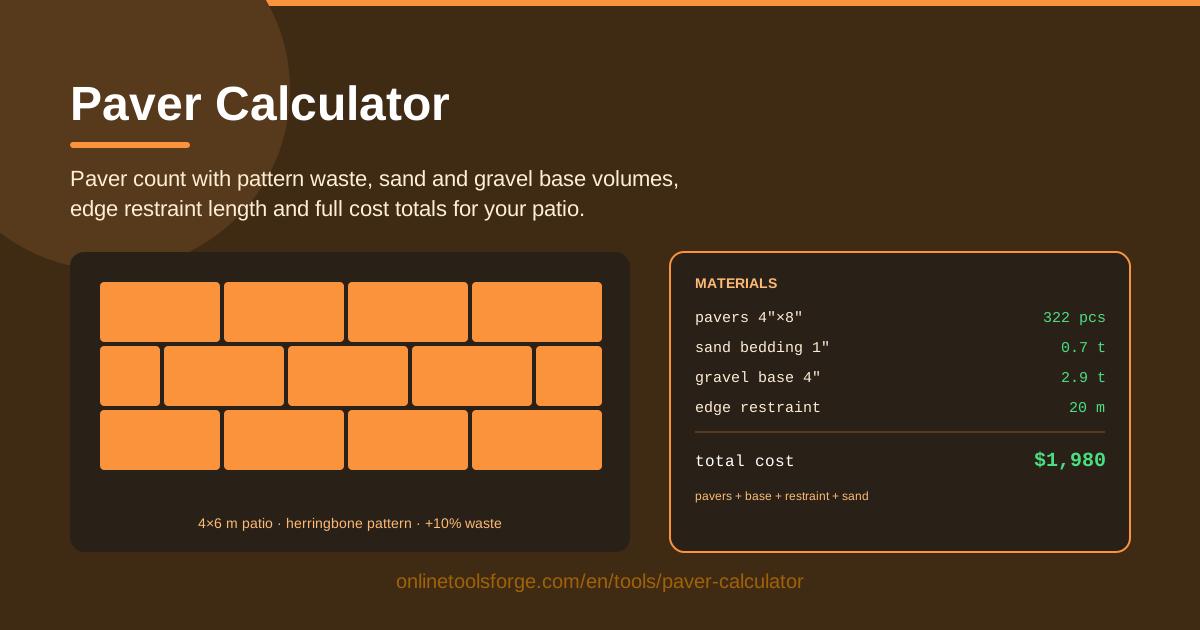
Table of Contents
A paver patio looks effortless in photos and unforgiving in real life. The most common failure point is not laying technique — it is material math. Order too few pavers and your herringbone pattern stalls halfway across the yard; order too many and the budget quietly burns. The Paver Calculator removes that gamble: enter your patio dimensions and paver size, and it computes the paver count including a pattern waste allowance, plus sand bedding and gravel base volumes, edge restraint length, and full cost totals in one pass.
A proper patio paver estimator does more than divide patio area by paver area: real hardscape sits on a compacted gravel base, bedding sand, and edge restraint around the perimeter — layers that all cost money and are easy to misestimate by hand.
Why Use Paver Calculator?
- Eliminates manual paver count errors. Dividing area by paver area sounds trivial until irregular shapes and phone-screen arithmetic slips get involved; the tool divides and rounds up correctly every time.
- Handles pattern waste automatically. Straight running bond wastes little; herringbone waste is another story because nearly every row ends in an angled cut. The allowance adapts to the pattern you plan to lay.
- Sizes what is under the surface. The sand and gravel base is often the hidden half of your material bill; the calculator converts patio area and base thickness into volumes you can order by the yard.
- Gives you the edge restraint length. Pavers creep without a border to push against. Knowing the exact perimeter run means buying restraint and spikes before you start.
- Totals the whole budget in one place. Pavers, sand, gravel, and restraint roll into full cost totals, so you can compare designs on price, not just looks.
- Runs entirely in your browser. No account, no uploads, no waiting — the math happens instantly on your device.
Key Features
| Feature | What it does |
|---|---|
| Patio dimensions input | Enter the length and width of your patio or walkway footprint |
| Paver size input | Set your chosen paver dimensions so coverage per piece is exact |
| Paver count with waste | Computes how many pavers to buy, including pattern cutting waste |
| Sand and gravel base volumes | Estimates bedding sand and compacted gravel base volumes beneath the surface |
| Edge restraint length | Calculates the perimeter run needed to lock the edges |
| Full cost totals | Rolls pavers, base materials, and restraint into complete budget figures |
A few details worth knowing:
- The waste allowance is pattern-aware. You set the percentage, so straight layouts run lean while herringbone gets the headroom it needs.
- Every output updates live. Change the paver size and the count, volumes, and cost totals move together for quick comparisons.
How to Use Paver Calculator
- Measure the patio. Measure the length and width at the string lines, not eyeball distances; break curves into rectangle sections and keep one unit system.
- Pick the paver size and pattern. Enter the paver dimensions you plan to buy and note whether the layout is stacked, running bond, basketweave, or herringbone; larger pavers mean fewer pieces and less cutting.
- Set the waste allowance. Choose a percentage matching the pattern: around 5% for straight layouts, 10% or more for herringbone waste from angled cuts; the paver count updates to include it.
- Review the base volumes. Check the sand bedding and gravel base volumes against the layer thicknesses you plan to compact; this tells you how many bulk yards or bags to schedule.
- Read the cost totals. Apply local unit prices to the paver count, volumes, and restraint length, then use the full cost totals to compare designs or sanity-check quotes.
Pavers, Base and the Pattern Tax
The core paver count math is simple: patio area divided by the area of one paver gives the raw piece count, rounded up to the next whole paver. If the calculator reports 1,037.4 pavers, you buy 1,038 before waste.
The interesting number is the waste allowance — call it the pattern tax. Stacked and running bond patterns let most pavers lay whole, so 5% covers trimming and breakage. Diagonal layouts and herringbone force a cut at nearly every row end, and those offcuts rarely fit elsewhere, so 10-15% is the realistic band — roughly 50 extra pavers on a 500-square-foot patio, the gap that strands projects mid-build.
Below the surface, two layers dominate the volume math. Bedding sand runs about one inch deep across the full patio area. The gravel base is the big one: four to six inches compacted for foot traffic, considerably more under vehicles. Because a base is specified at its compacted thickness, ordering a slightly larger loose volume is normal.
Edge restraint is the final perimeter. For a rectangle, restraint length equals twice the length plus twice the width. It looks like a minor line item until you price it by the run, yet it is what stops border pavers from migrating into the lawn.
Finally, sanity-check the cost totals: paver price times count, plus sand and gravel by volume, plus restraint by length should land in a believable range. If one option totals dramatically less, the culprit is usually a missing base layer, not a bargain.
Practical Use Cases
Backyard Patio Build
A 16-by-20-foot patio in 16x16 pavers laid in herringbone needs a paver count well above naive area division once pattern waste lands. Running the numbers first tells you whether to split the paver delivery, how many gravel yards to book, and how many restraint packages to buy — turning a sketch into a shopping list.
Walkway Project
Walkways are narrow, so cutting waste runs proportionally worse because border trimming eats a larger share of each course. A 3-by-40-foot path in 12x12 pavers is quick to evaluate, and the long edge restraint run is easy to underestimate on paper.
Driveway Comparison
Paver driveways live or die on the base. Comparing pavers against plain concrete means pricing a deeper compacted gravel base and thicker pavers for vehicle loads. Run both scenarios and the full cost totals show whether pavers are a stretch or a nonstarter.
Contractor Quote Review
When a quote arrives, rebuild it independently: enter the quoted dimensions and paver size, apply the pattern's waste allowance, and compare the resulting paver count and base volumes against the line items. Missing edge restraint, or sand bought by the bag for a large base, stands out immediately.
Best Practices
- Order about 10% extra pavers even after the waste allowance. Dye lots change between production runs, and future repairs need matching stock.
- Compact the gravel base in lifts. Compacting four inches at once traps loose material underneath; two inches per pass builds a base that does not settle.
- Plan the drainage slope. Grade the surface a quarter inch per foot away from the house so water runs off rather than pooling at the foundation.
- Buy edge restraint before starting. The border locks everything in; installing it late means disturbing a sand bed you already leveled.
- Verify dimensions on site. Fences and house walls are rarely square, so confirm measurements before committing to a paver count.
- Treat the totals as living numbers. Re-run the calculator whenever the design changes and the budget moves with it.
Ready to price your patio properly? Open the Paver Calculator, enter your dimensions, and walk into the supplier with exact counts instead of guesses.
Related Tools You Might Like:
- Tile Calculator — indoor surface coverage with the same area math
- Square Footage Calculator — quick room and lot area checks
- Drywall Calculator — sizing boards and sheets for interior projects
Happy building!
Frequently Asked Questions
Q: How many extra pavers should I order for a herringbone pattern? A: Plan for 10-15% waste on top of the raw paver count, because herringbone rows end in angled cuts that rarely get reused; the calculator applies your allowance automatically, and you round up to the nearest full bundle.
Q: How deep should the gravel base be under a paver patio? A: Four to six inches of compacted gravel is standard for pedestrian patios; driveways need more. The calculator converts your patio area and chosen base thickness into an orderable gravel volume, so deliveries match what you will compact.
Q: Does the edge restraint length cover curved edges? A: The restraint length is the perimeter of the dimensions you enter. For gentle curves, add a modest buffer, because flexible restraint follows bends with less usable run than a straight installation.
Q: Can I use the calculator with metric measurements? A: Yes. Enter dimensions and paver sizes in meters or centimeters and every output stays consistent — just keep all inputs in one unit system.